




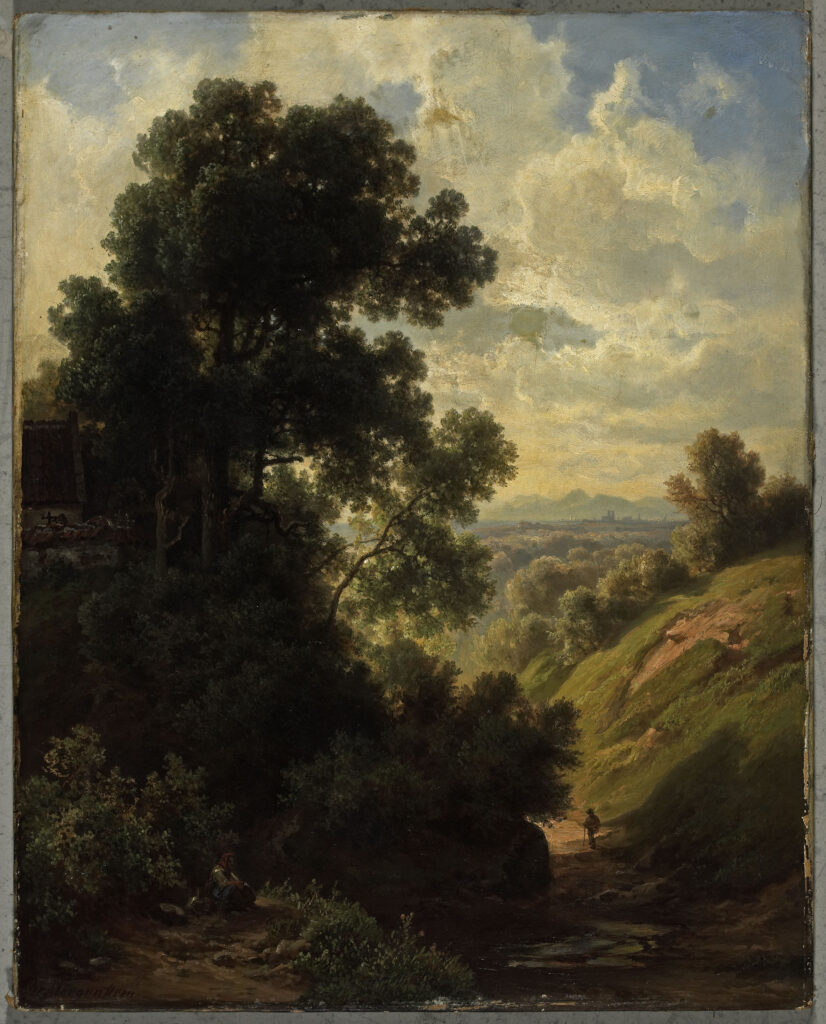
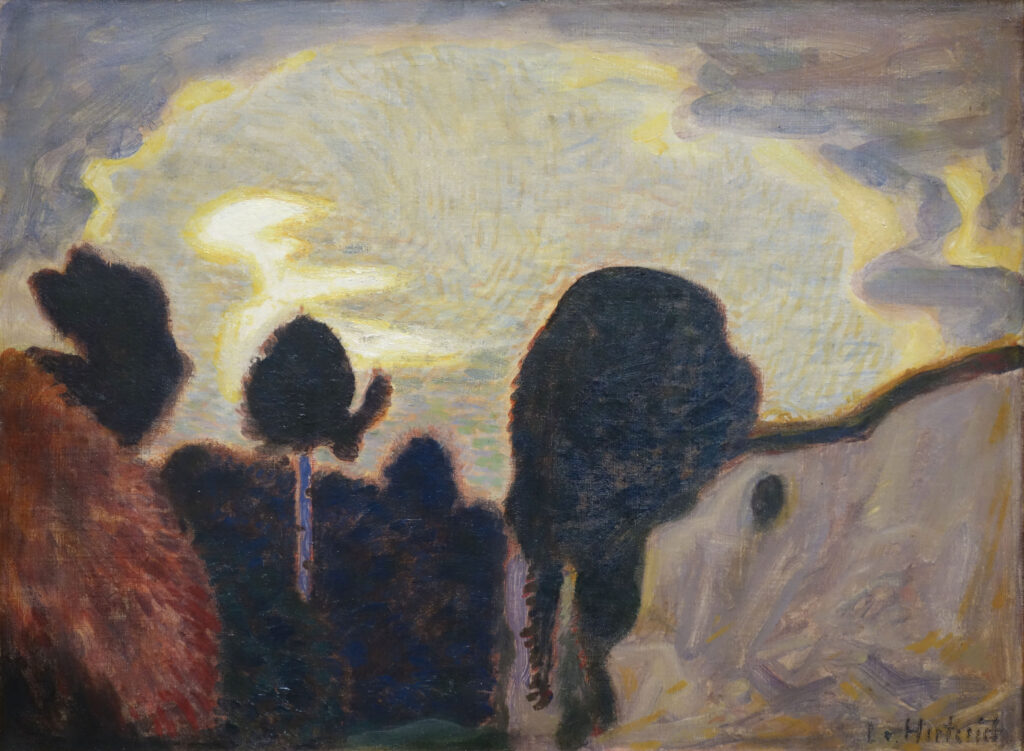
Etzenhausen artists' trail

A circular trail in the footsteps of the historic artists' village of Etzenhausen

Etzenhausen - a place of artists

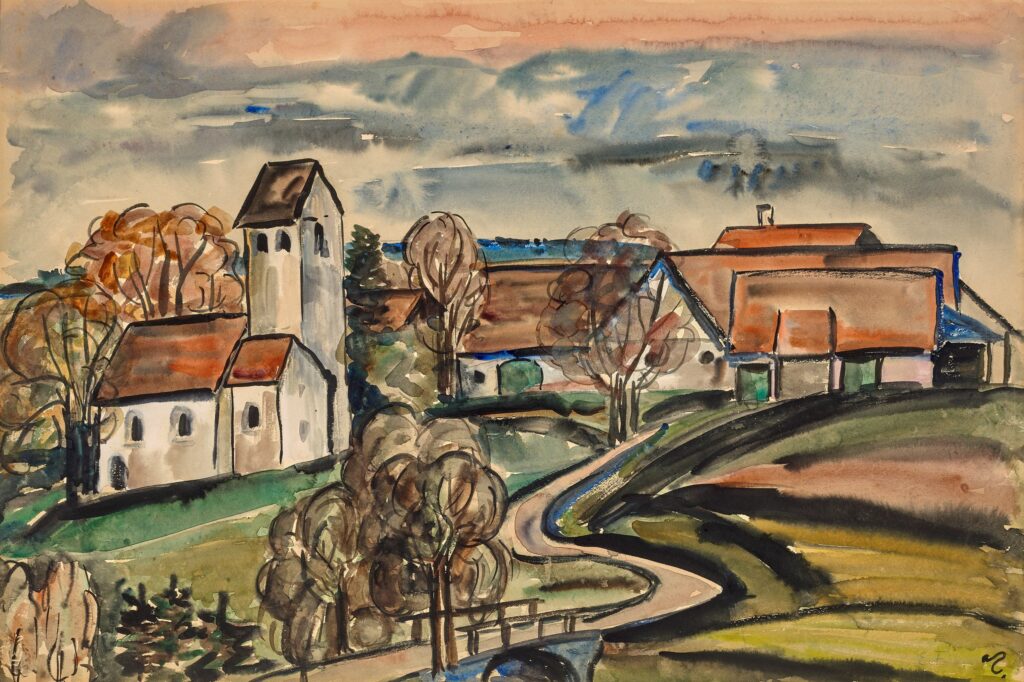
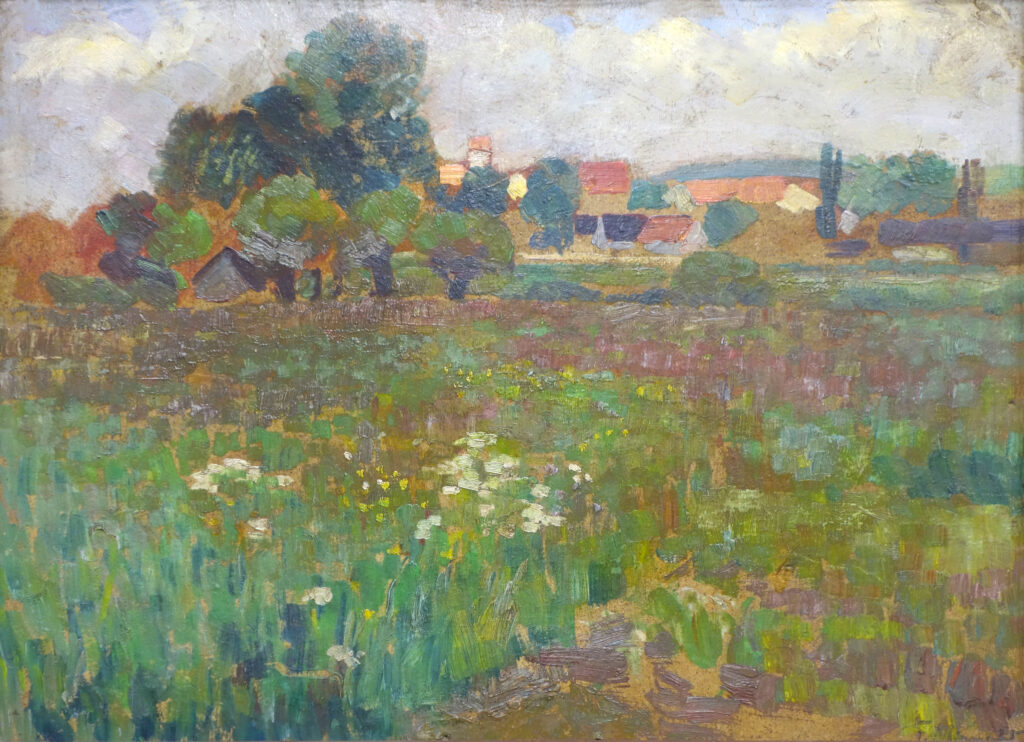
While the neighboring market town of Dachau became more and more urban after 1900, Etzenhausen retained its village character. The branch church of St. Laurentius and the cemetery on the hill, the old farmhouses, some of which still have thatched roofs, the hollow paths, the Webelsbach stream and the wooden Amperbrücke bridge provided artists with a wealth of picturesque motifs. 


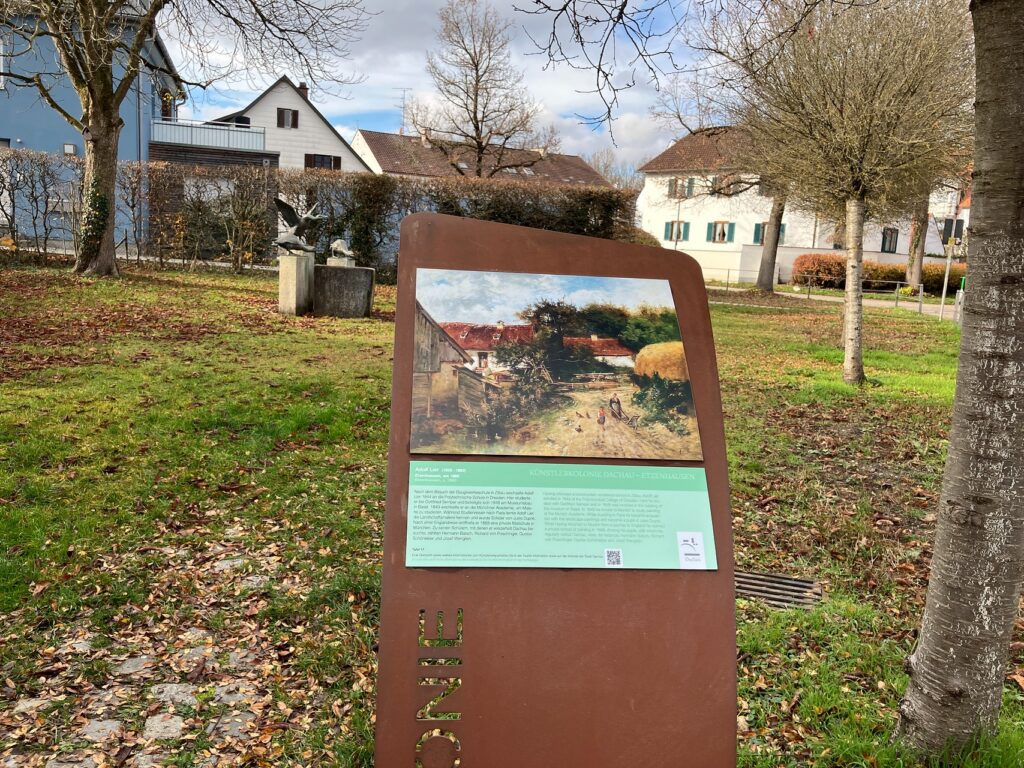
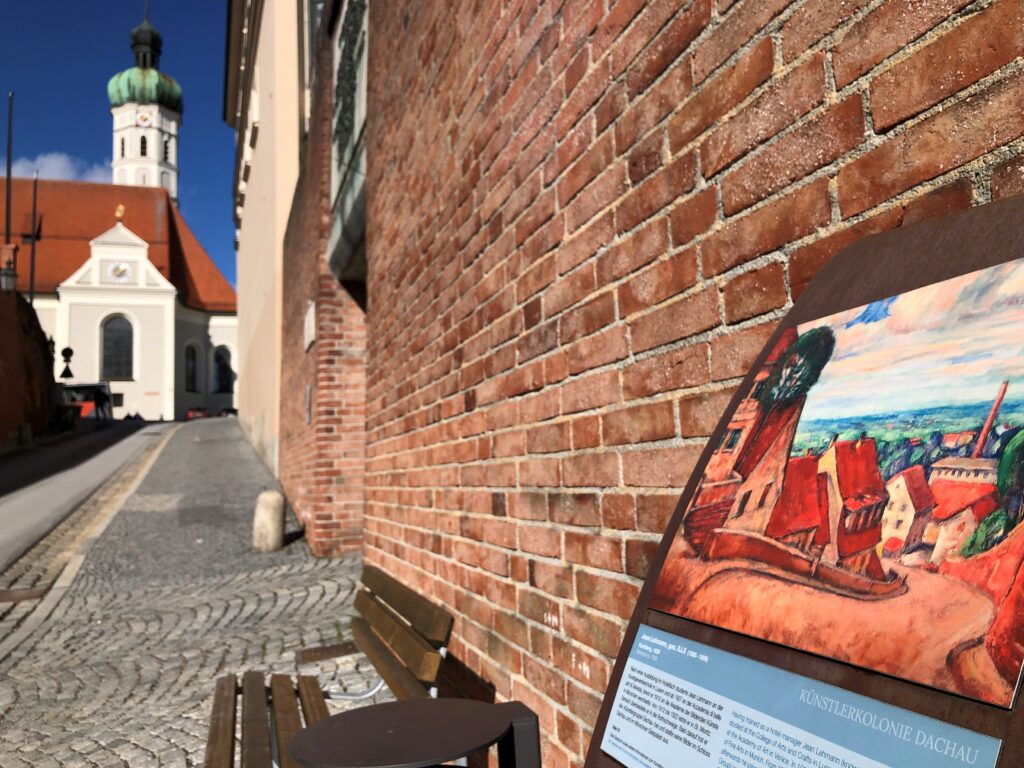
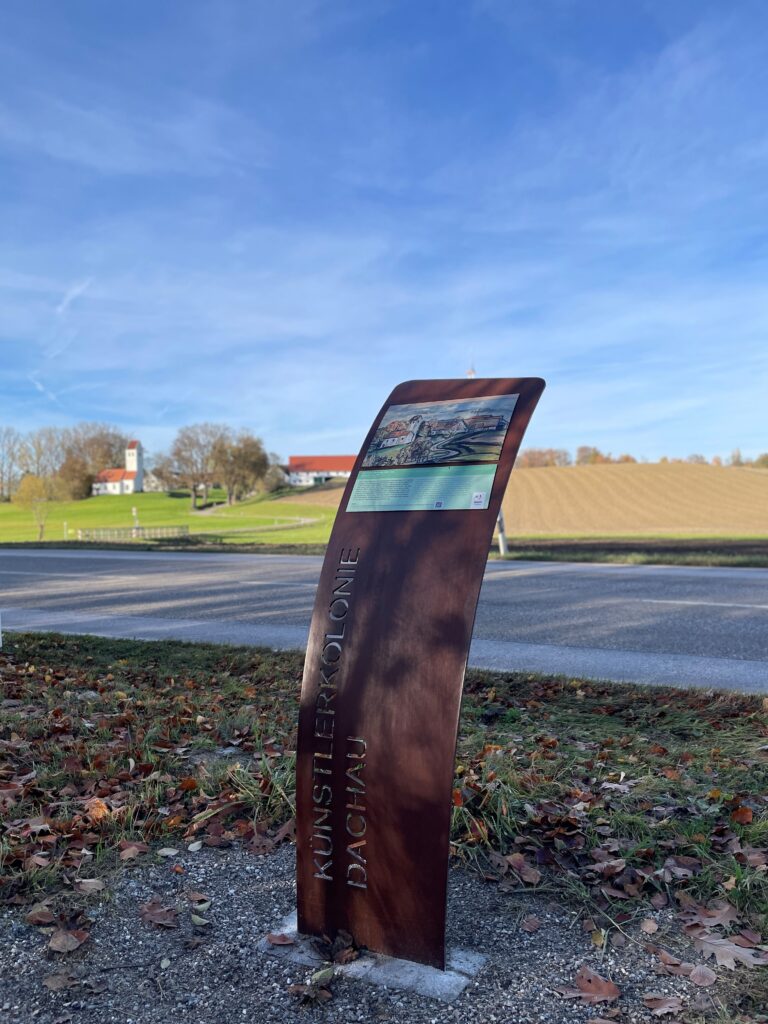
Discover this part of the artists' colony and its motifs on this tour. At the painting steles, you will see the painters' perspective on their motifs.


Most of these paintings can be seen in the original in the permanent exhibition at the Dachau Picture Gallery.

Starting pointt: Hermannstraße 

Path lengthapprox. 4.86 km

Texture: 

Durationapprox. 1.5 hours.

Height difference: 50 m

Flyer with route guidance

Take the painters' perspective on their motifs.

Etzenhausen Artists' Trail: 17 stelae lead through the former artists' village of Etzenhausen near Dachau.

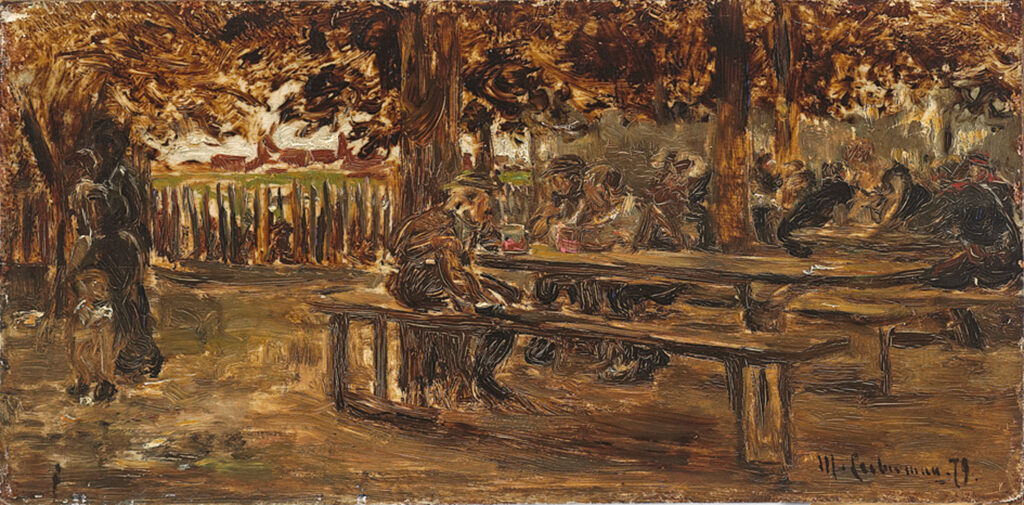
Max Liebermann (1847 - 1935)

Beer garden in Etzenhausen, 1879
Oil on wood, 13.7 x 26.5 x 1cm
Dr. Ulrich and Gertrude Lechner Foundation, photo Peter Brunner
Hermannstrasse

Liebermann received his first training from Karl Steffeck (horse painter) in Berlin. In 1868 he studied at the Weimar Academy of Art. In 1872, he studied the works of Gustav Courbet and Jean
Francoise Millets. During a further stay in Paris, he became acquainted with the Barbizon School. In 1875 he traveled to Holland. From 1878 to 1884 he stayed in Munich and visited Dachau in 1879. In 1884 he moved to Berlin. There he was appointed president of the Berlin Secession in 1899. Between 1920-33 he was president of the Prussian Academy of Arts. In 1933 he was banned from painting and exhibiting and after his death his paintings were considered degenerate.

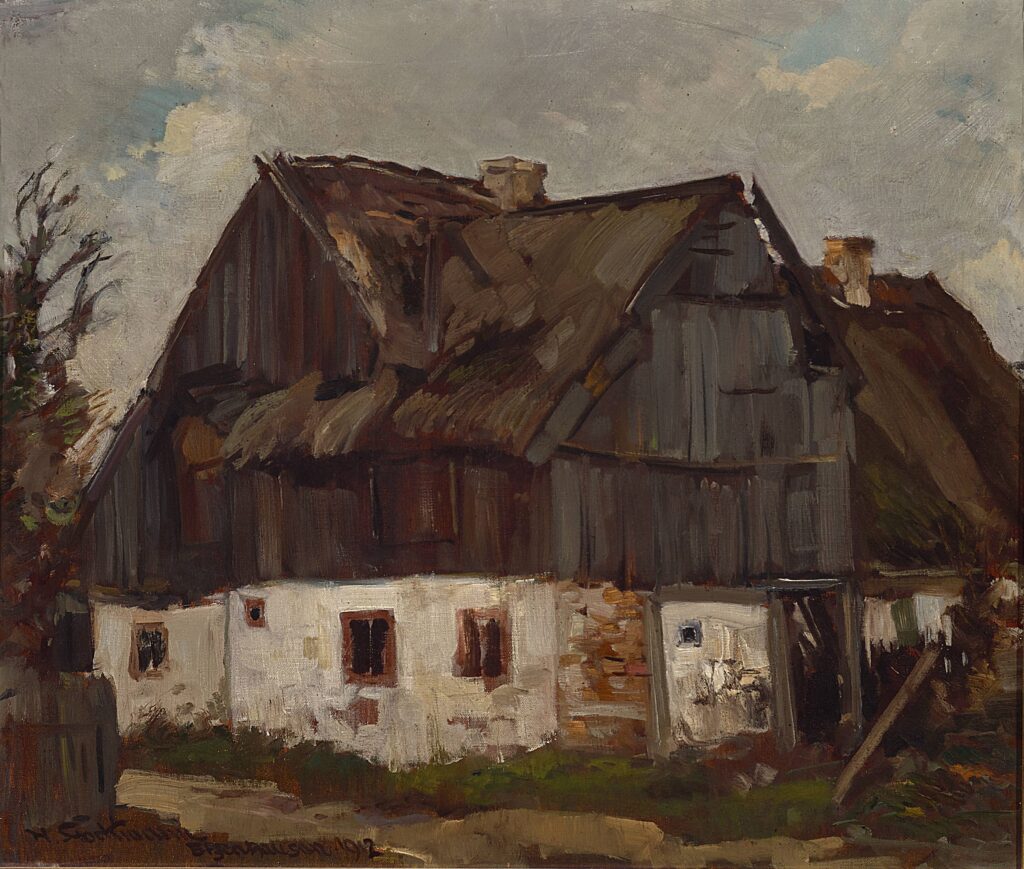
Hermann Stockmann (1867 - 1938)

Farmhouse in Etzenhausen, 1912
Oil on canvas, 56.7 x 67 cm
City of Dachau, photo Peter Brunner
Ostlerstrasse

From 1881-1884 he completed an apprenticeship as a decorative painter in Munich. He then entered the Academy of Fine Arts, where he attended Gabriel von Hackl's antique class from April 21, 1884 (registration no. 5043). He then moved on to Johann Caspar Herterich and Wilhelm von Diez. From 1897 onwards he worked
for the »Fliegende Blätter« and »Die Jugend. In the same year, he acquired a plot of land in Dachau from Josef Scheierl and built his »Spatzenschlössl« in 1898. In 1903, he co-founded the Dachau Museum Association alongside August Pfaltz and Hans von Hayek. On November 27, 1927, he acquired Dachau citizenship and became chairman of the Dachau Artists' Association in the same year.

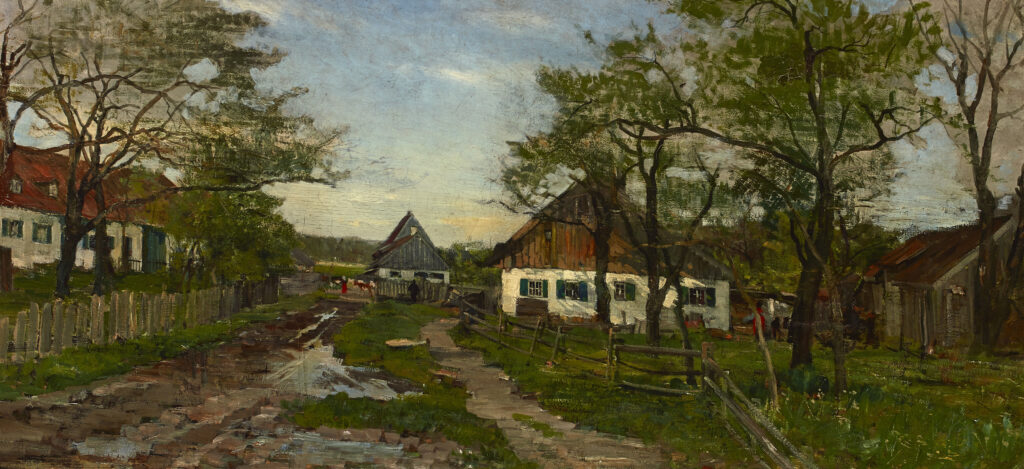
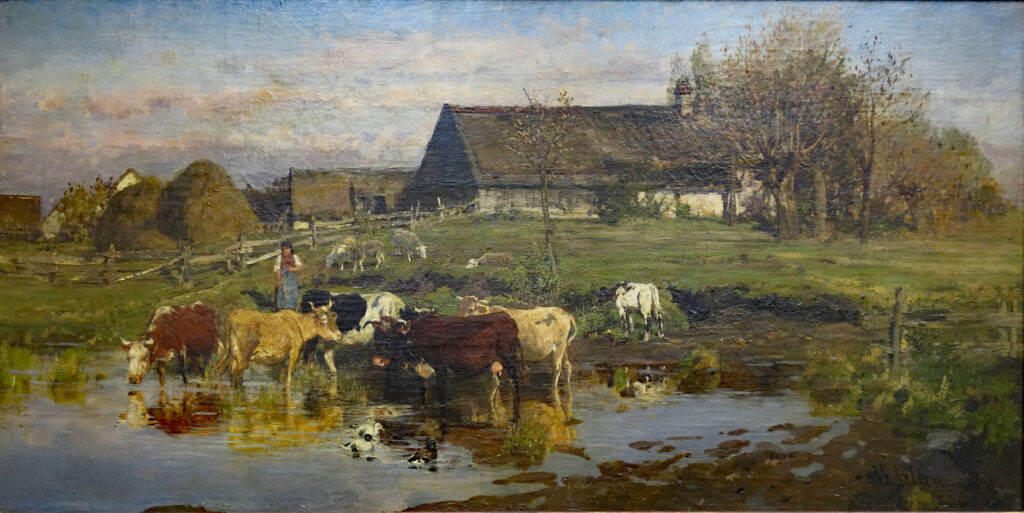
Wilhelm Velten (1847 - 1929)

Etzenhausen, around 1875
Oil on canvas, 52 x 101 cm
Dr. Ulrich and Gertrude Lechner Foundation, photo Peter Brunner
At the Webelsbach

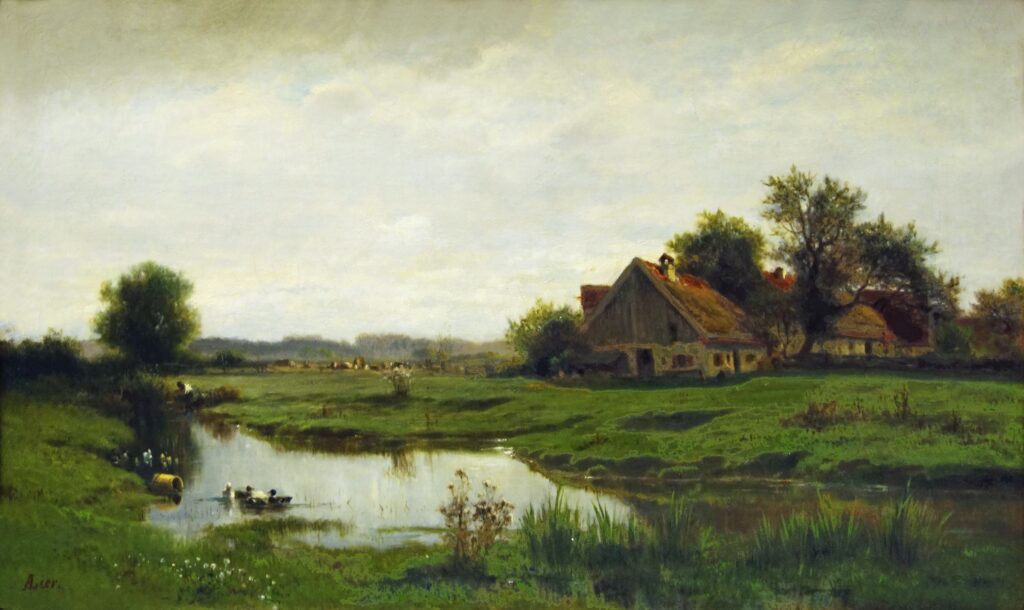
Adolf Lier (1826 - 1882)

Farmstead by the stream (Etzenhausen), around 1869
Oil on canvas, 45 x 76.5 cm
Dr. Ulrich and Gertrude Lechner Foundation, photo Peter Brunner
Buchkastrasse

After attending the building trade school in Zittau, he transferred to the polytechnic school in Dresden in 1844. Here he studied under Gottfried Semper and took part in the construction of the museum in Basel in 1848. In 1849 he transferred to the Munich Academy to study painting. During a study trip to Paris in 1861, he became acquainted with the landscape paintings of the Barbizon artists, Rousseau, Daubigny and Dupré. In 1864, during a second stay in Paris, he became a pupil of Jules Dupre. During a visit to England, he saw the paintings of John Constable. Back in Munich, he opened a private painting school in 1869. His students, with whom he repeatedly visited Dachau, included Hermann Baisch, Richard von Poschinger, Gustav Schönleber and Josef Wenglein.

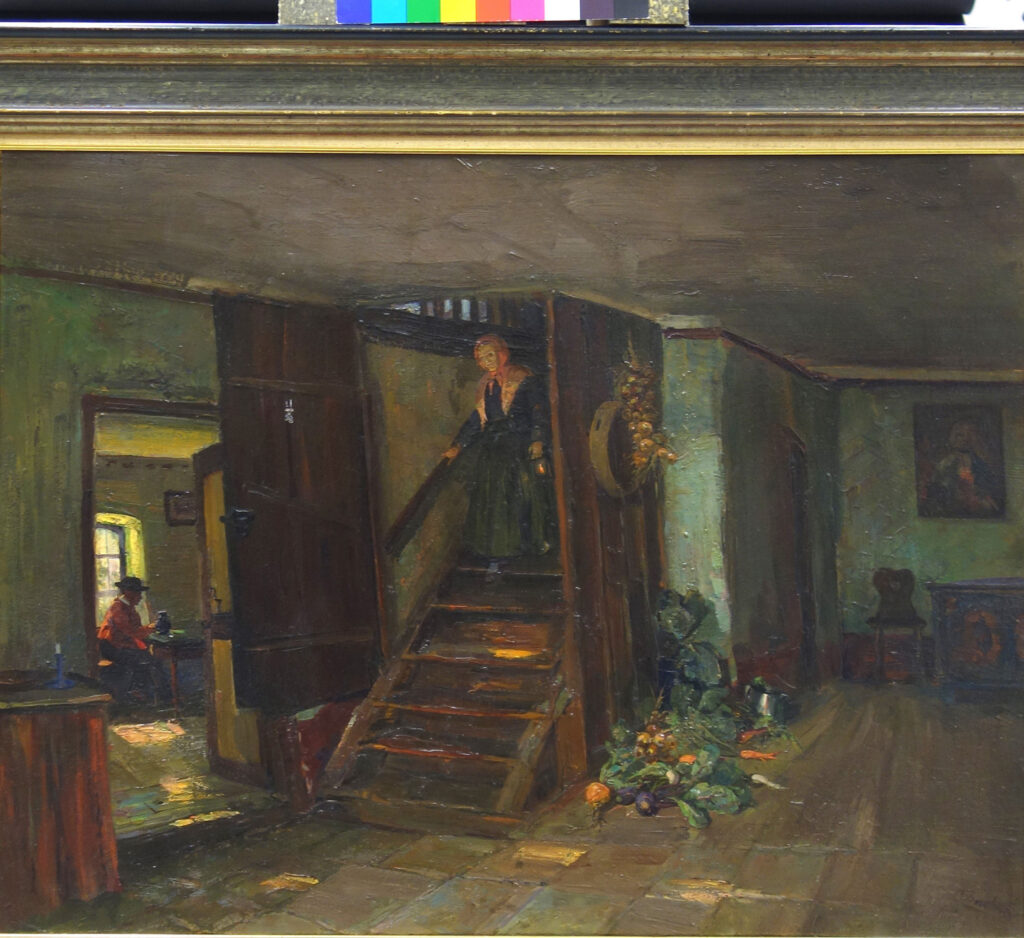
Karl Buchka (1868 - 1931)

Farmhouse parlor, around 1900
Oil on wood, 53.5 x 70.5 x 2.5 cm
Dachau Museum Association, photo Peter Brunner
Ostlerstrasse / Freisinger Strasse

Karl Buchka (23.11.1868 Frankfurt a.M. - 4.1.1931 Dachau, Etzenhausen / registered in Dachau 1893-95: Registration: 29.7.-1.11.1893 Schleißheimer Str. 21; 1.4.1894 and 1895 Schleißheimer Str. 34)


Karl Buchka came from an old Frankfurt patrician family that was well acquainted with the Morgenstern family. From 1886-90 and 1892/93, he studied at the Städelsches Kunstinstitut in Frankfurt a.M. under Johann Heinrich Hasselhorst. In the years 1893-95 he studied in Munich with Victor Weishaupt before moving to Haimhausen. In 1905 he married the painter Emmy Lenbach, a niece of the famous Munich painter Franz von Lenbach.

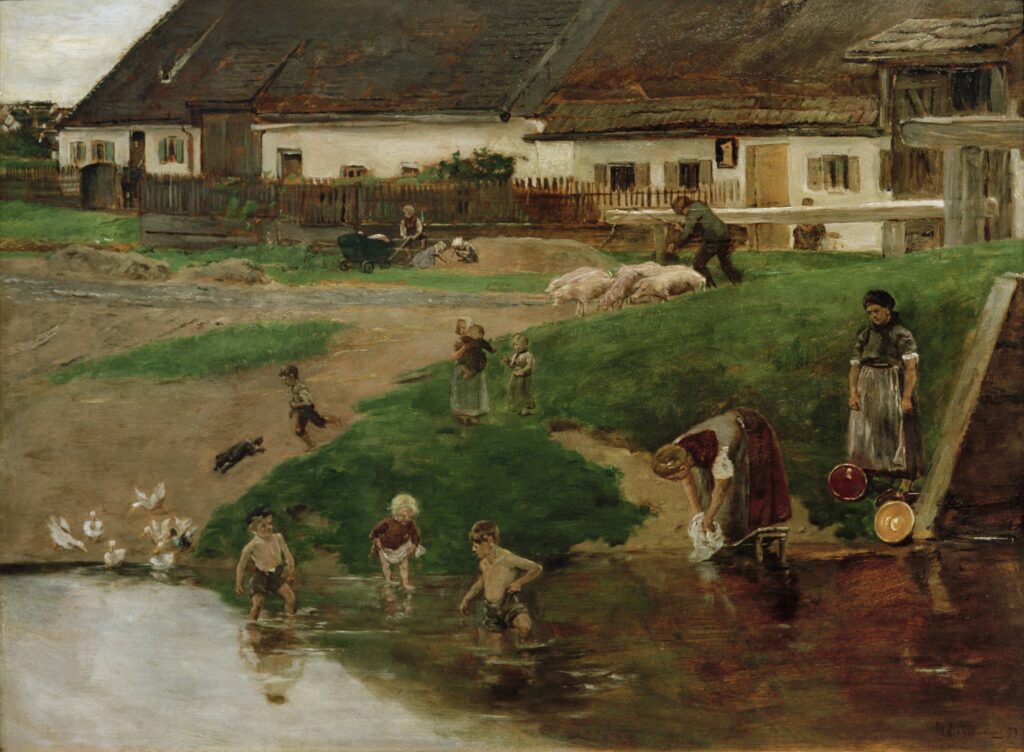
Max Liebermann (1847 - 1935)

Village pond in Etzenhausen - village idyll, 1879
Oil on canvas, 45 x 60 cm
Private property, akg images
Freisinger Straße

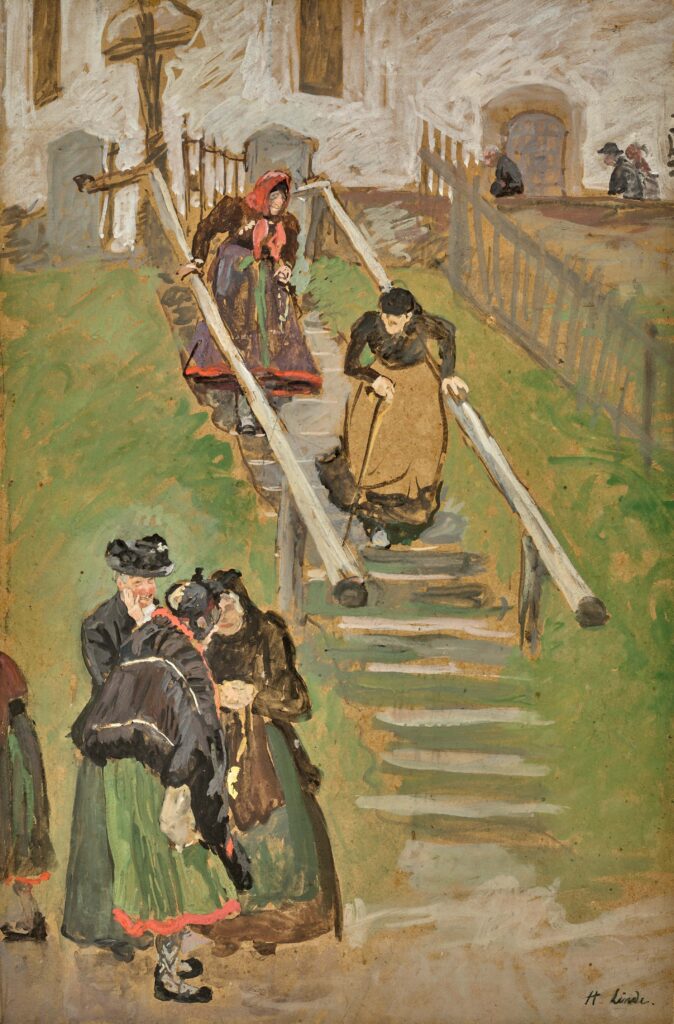
Hermann Linde (1863 - 1923)

Dachau women on the cemetery steps of St. Laurentius
in Etzenhausen, around 1905
Gouache on cardboard, 68 x 45 cm
Private property, photo Peter Brunner
Von-Herterich-Straße

After an apprenticeship in his father's photo studio, he studied at the Academy of Fine Arts in Dresden from 1882 to 1885 and from 1889 at the Weimar School of Art under Max Thedy and Albert Heinrich Brendel.
An attempt to gain a foothold as an artist in Hamburg failed. In 1889-91 he undertook study trips to Sicily, Egypt and Tunisia. From 1892-95 he worked as a freelance painter in Haiderabad/India. For his
For his painting »The Langar Procession« he was awarded the Golden Medal of the Viceroy of India in 1894. In 1895 he returned to Hamburg. In 1896 he traveled to Tunis via Paris and Marseille. In the years 1896-98 he lived in Dachau, in 1899/1900 in Munich. Je oN ay Jung married, he moved with his wife to Etzenhausen at the end of 1900, where they lived until 1914. From 1906, he was a member of Rudolf Steiner's Theosophical Society, which he followed to Arlesheim in 1914. Here he was commissioned to design the interior of the first Goetheanum, which was destroyed by fire in 1922.

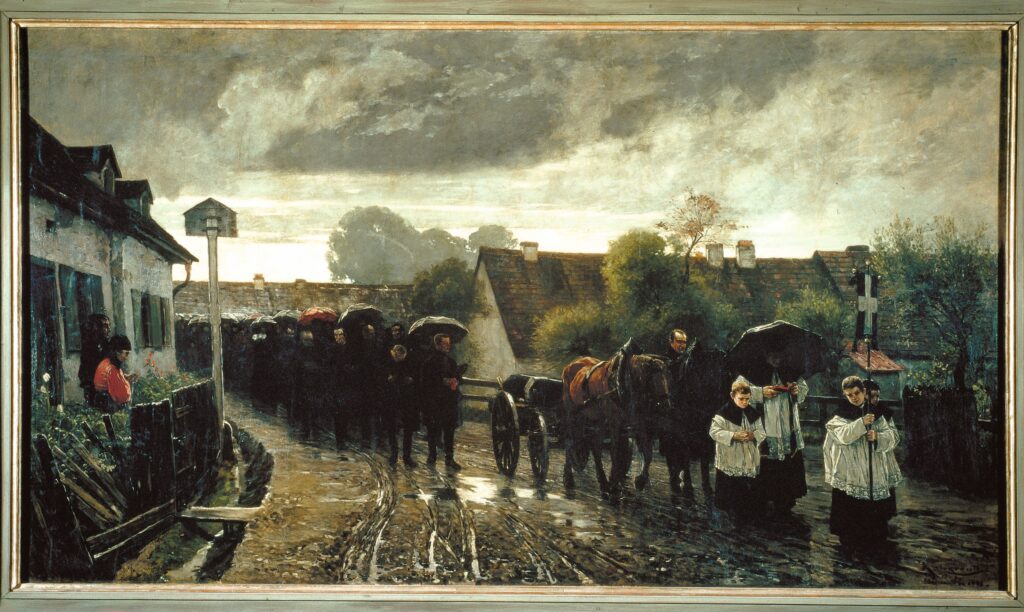
Leopold von Kalckreuth (1855 - 1928)

Dachau funeral procession, 1883
Oil on canvas, 170 x 300 cm
Klassik Stiftung Weimar, Duchess Anna Amalia Library,
Photo Peter Brunner
Von-Herterich-Straße / St. Laurentius

He received his first training in 1875 at the art school in Weimar in Ferdinand Schauß's antique class. From 1876-78 he studied under the Belgian history painters Alexander Struys and Willem Linning. From 1879, he studied under Karl von Piloty in Munich. From 1882 he spent the summer months in Dachau. Study trips took him to Holland, Pomerania and Italy in 1883 before he was appointed to the art school in Weimar. From 1889, he was a »corresponding member« of the Association of Austrian Fine Artists. Between 1895-99 he taught at the academy in Karlsruhe and then at the academy in Stuttgart until 1905. In 1903 he became president of the Deutscher Künstlerbund. He lived in Eddelsen/Hamburg from 1907 and was a member of the Berlin Academy from 1919.

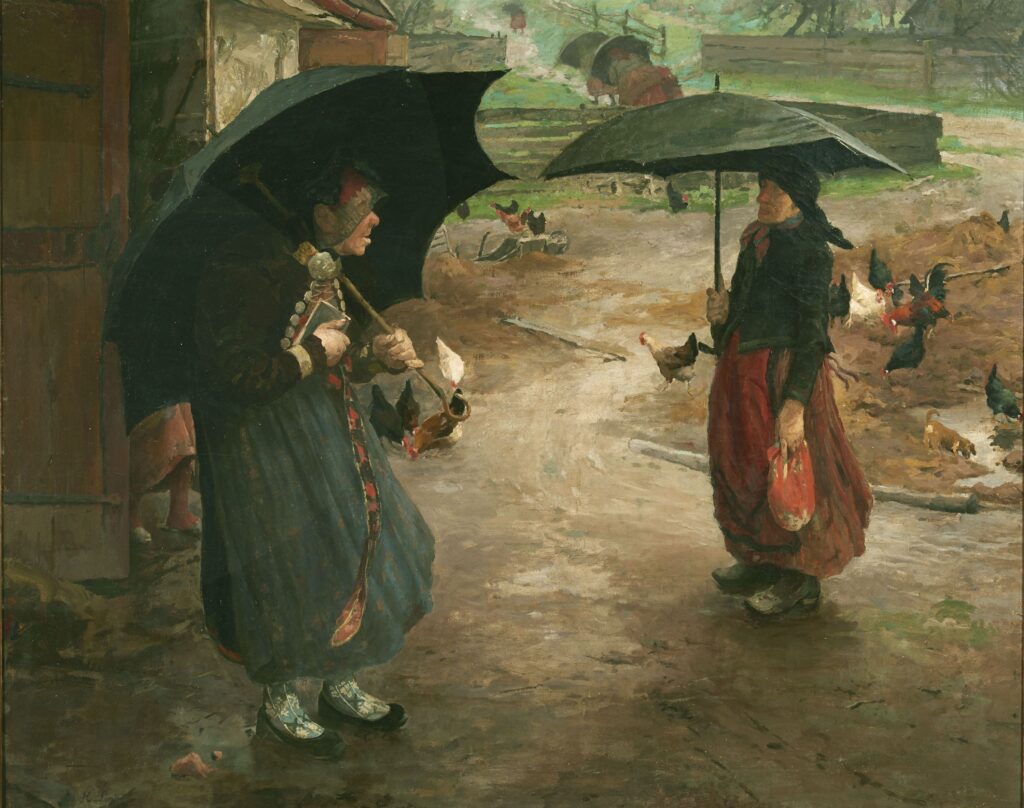
Hermann Linde (1863 - 1923)

Rainy weather, before 1902
Oil on canvas, 81 x 99 cm
Dr. Ulrich and Gertrude Lechner Foundation, photo Peter Brunner
Von-Herterich-Straße (keep right)

Christian E. B. Morgenstern (1805 - 1867)

Hollow path with hiker, 1850s
Oil on canvas, 58.5 x 46.3 cm
Sparkasse Dachau, photo Peter Brunner
Bergstrasse / Emi-Fuchs-Hussong-Weg

As the third of six children of the Hamburg miniature painter Carl Morgenstern, he began his training in 1818 in the graphic workshop of the Suhr brothers. In 1824 he studied under Siegfried Bendixen, who recommended that he study from nature. In 1822-23 he undertook a journey to Russia. In 1827/28 he studied at the Copenhagen Academy of Fine Arts and from there traveled to Sweden and Norway. He continued his studies with Wasmann, Dahl and Menzel in Munich in 1829/30. He was friends with Carl Rottmann and had contact with Eduard Schleich the Elder and Carl Spitzweg. He undertook further trips to Alsace and the Rhine in 1836 and to Hamburg and Heligoland in 1839. In 1851 he visited Paris with Eduard Schleich the Elder and Carl Spitzweg. From 1853, he often spent summers in Dachau.

Ludwig von Herterich (1856 - 1932)

The long alley in Dachau, n. d. 
Oil on canvas, 57.5 x 77.5 cm
City of Dachau, photo Peter Brunner
Mountain roade / Lange Gasse

He received his first training from his father, a sculptor and gilder. He then studied with his brother, the painter Johann Herterich, from 1872. On October 22, 1873, he entered the sculpture class at the Academy of Fine Arts in Munich, from where he moved on to Wilhelm von Diez and Wilhelm Dürr the Younger. Between 1885-89 he taught drawing from plaster models at the Damenakademie in Munich and from 1887-1895 he taught nude painting. From 1989 he was a »Corresponding Member« of the Association of Austrian Fine Artists. From 1896 to 1898 he taught at the Stuttgart Art School. In 1898, he was appointed professor at the Academy in Munich, which he held until 1930. In 1908, he was awarded the Maximilian Order and elevated to the nobility. From 1914 onwards, he lived in Etzenhausen near Dachau.
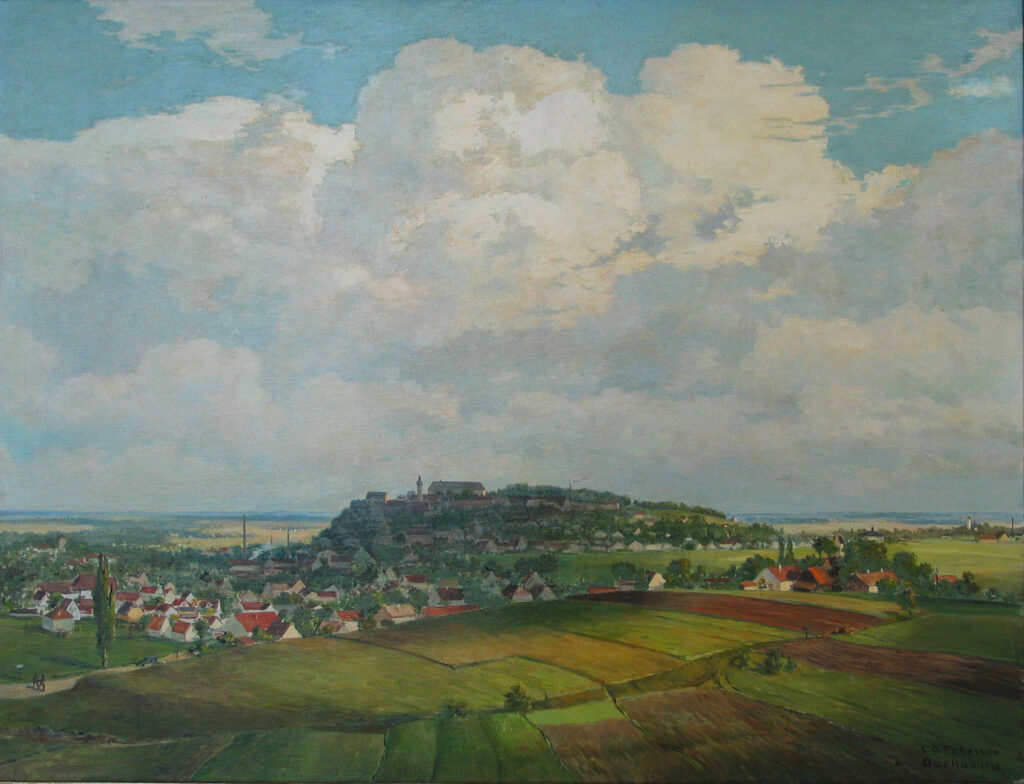
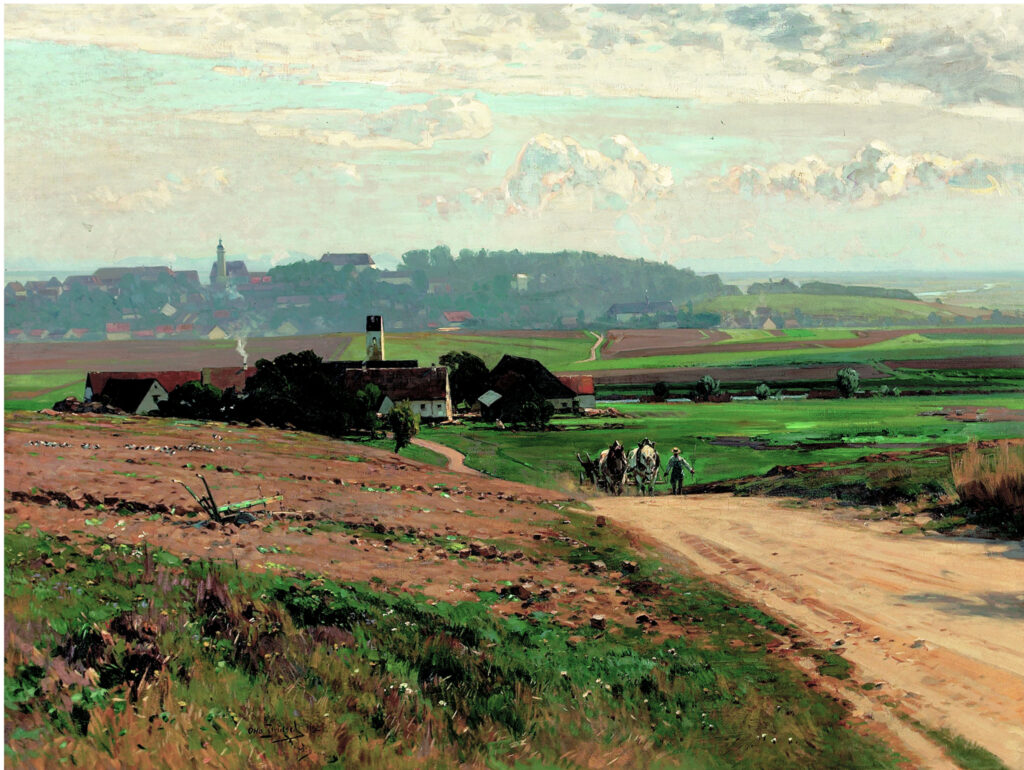
 

Carl Olof Petersen (1881 - 1939)

View of Dachau, 1938
Oil on canvas, 84.5 x 109 cm
Dachau Museum Association, photo Peter Brunner
Field path near the Regina Pacis memorial chapel

Carl Olof Petersen moved to Dachau in October 1903 to take lessons in landscape painting at Adolf Hölzel's painting school. In 1904, he moved to Hans von Hayek to study animal painting.
learn. From 1896 he drew for »Simplicissimus« and from 1904 for »Die Jugend. He learned the technique of woodblock printing from Carl Thiemann, who moved to Dachau in 1908. In 1913 he married the
writer Elly Hirschfeld, whose books he illustrated. He also wrote his own books, mainly children's books.

Otto Strützel (1855 - 1930)

View of Dachau, 1921
Oil on canvas, 102 x 135 cm
Private property, photo Peter Brunner
Lange Gasse / picnic area

Otto Strützel initially studied at the Leipzig School of Arts and Crafts before transferring to the Düsseldorf Art Academy in 1879. He attended the Willingshausen artists‘ colony in the Schwalm. From Munich, where he had moved in 1885, he undertook numerous study trips to France, Denmark and Sweden. He repeatedly visited the Dachau artists' colony during the summer months from 1883 onwards. In the fire at the Glaspalast in Munich in 1931, he lost 61 of his paintings exhibited there.

Emi Fuchs-Hussong (1901-1982)

Steinkirchen, around 1970
Watercolor on paper, 35.3 x 52.3 cm
Dachau Picture Gallery, photo Peter Brunner
Weblinger Weg

Ferdinand Mirwald (1872 - 1948)

Etzenhausen, around 1919
Oil on cardboard, 36.5 x 49.5 x 0.4 cm
Dachau Museum Association, photo Peter Brunner
Weblinger Weg / Freisinger Straße

Still on a journey of art-historical discovery?

You can also visit the Dachau Altstadt & Amper artists' trail.